This post contains affiliate links. If you make a purchase through these links, I earn a small commission at no extra cost to you. I only recommend products and services I genuinely believe will help your Japan trip.

Nagoya Food Guide: 8 Local Dishes You Can’t Find Anywhere Else
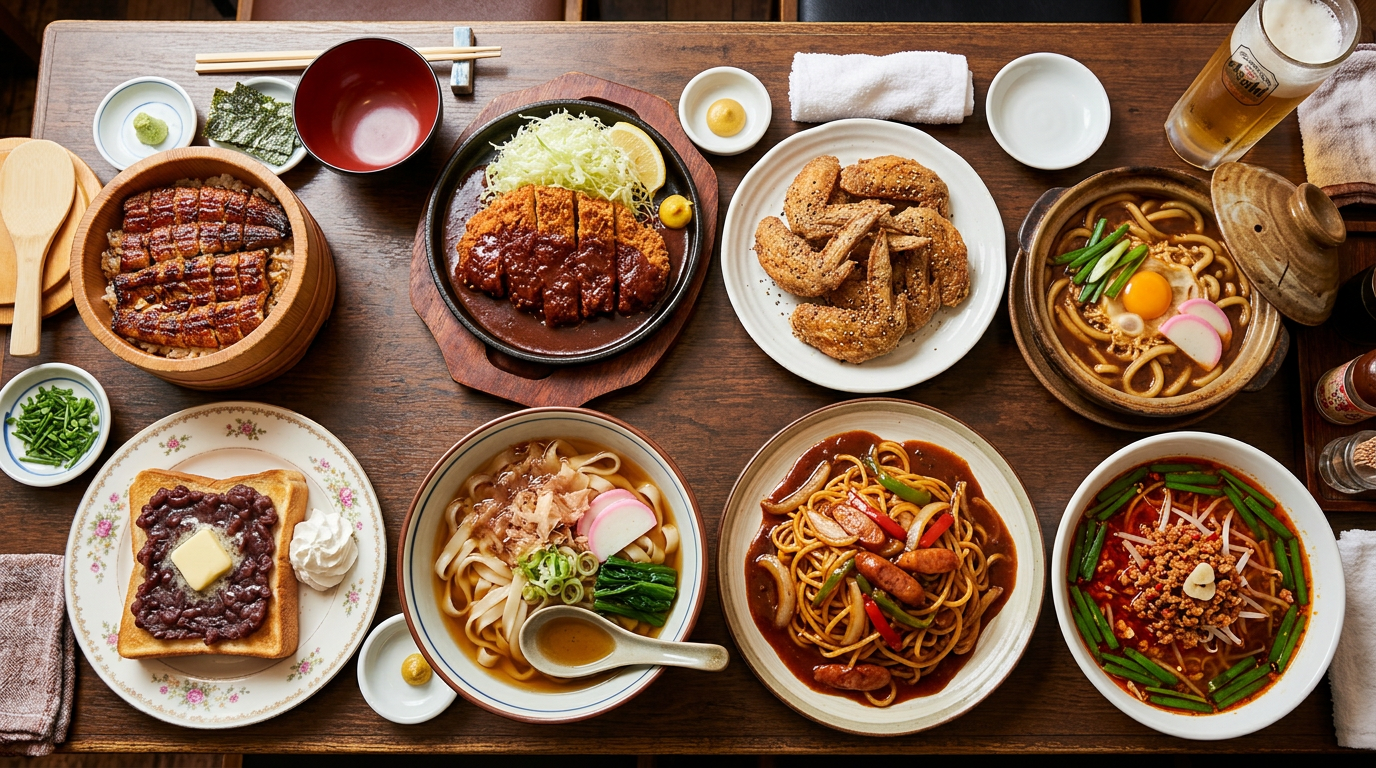
Nagoya’s city emblem is the maru-hachi – a circle with the number eight inside. Eight means spreading prosperity in Japanese culture. So it’s only fitting that this guide covers exactly 8 Nagoya dishes you won’t find anywhere else in Japan.
Wedged between Tokyo and Osaka, Nagoya is Japan’s third-largest metropolitan area – and possibly its most underrated food destination. From dishes swimming in dark hatcho miso to a spicy ramen that doesn’t actually exist in Taiwan, Nagoya has developed a food culture so distinct that locals gave it its own name: Nagoya meshi (Nagoya food).
As a Nagoya resident, I’ve eaten my way through this city more times than I can count. Here’s your complete guide to the 8 dishes you absolutely need to try, with restaurant recommendations, prices, hours, and the insider tips that only a local would know.
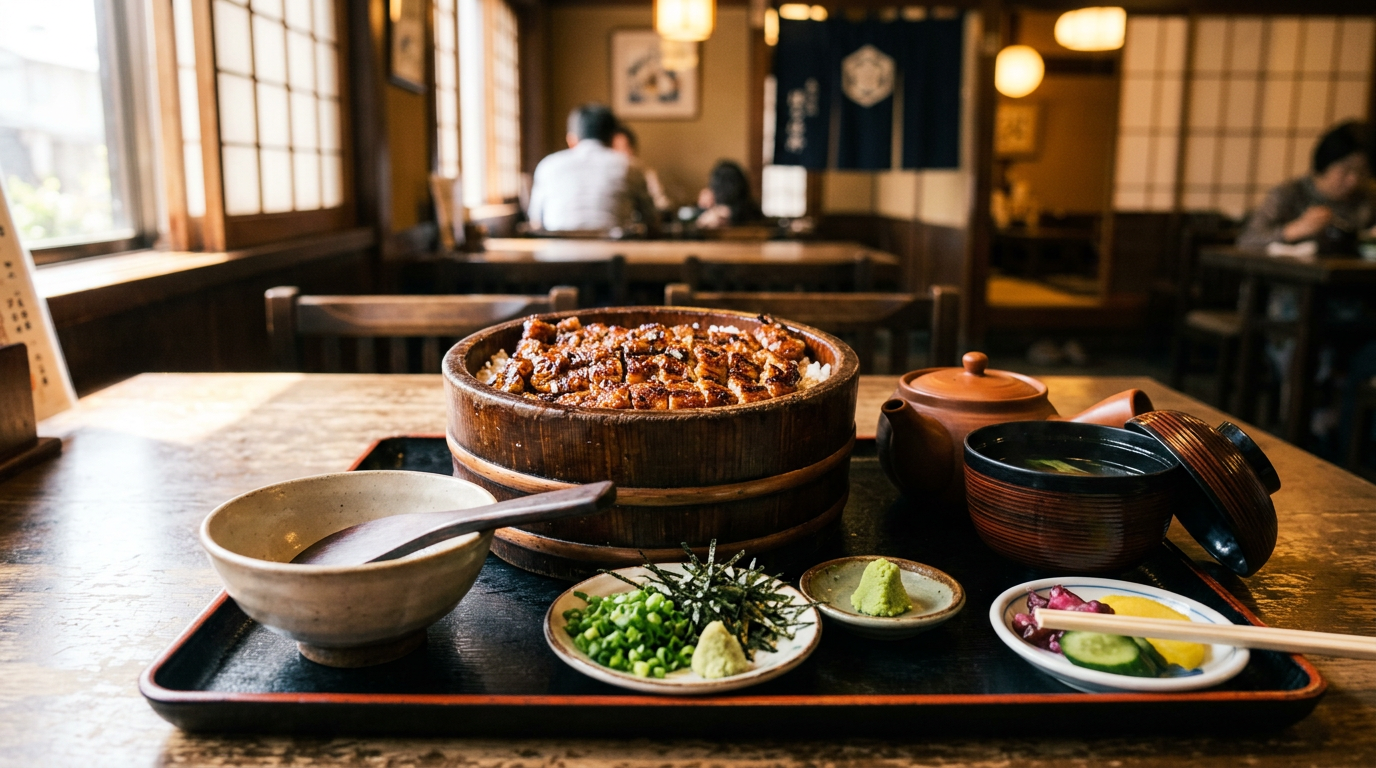
1. Hitsumabushi (ひつまぶし) — Grilled Eel, Three Ways
You love BBQ? Imagine eel glazed in a secret sauce and charcoal-grilled to perfection. That sweet-savory char will change your life forever — and that’s just the first of three ways to eat it.
What it is: Charcoal-grilled eel, finely chopped and served in a wooden rice tub called an ohitsu. What makes hitsumabushi special is the three-way eating ritual:
- Plain — Scoop a portion and eat it as-is to taste the pure eel flavor
- With condiments — Add wasabi, green onion, and nori for a fresh kick
- As ochazuke — Pour dashi broth over the eel and rice for a savory tea-soup finish
The word “hitsumabushi” is actually a registered trademark of its inventor – Atsuta Horaiken. The trademark covers retail products; restaurants can still use the word on their menus.
Where to eat: Atsuta Horaiken Honten (あつた蓬莱軒 本店)
The birthplace of hitsumabushi. Serving since 1873.
- Must-try: Hitsumabushi ¥4,950 (includes condiments, dashi broth, clear soup, and pickles)
- Price: ~¥4,000-6,000 per person
- Hours: 11:30-14:00 (L.O.) / 16:30-20:30 (L.O.)
- Closed: Wednesdays + 2nd & 4th Thursdays
- Getting there: Meijo Line, Atsuta Jingu Denmacho Station, Exit 4 → 7 min walk
- Official: https://www.houraiken.com/
- Reservation: Not accepted for hitsumabushi (walk-in only)
- Local tip: Expect 1-2 hour waits on weekends. Tell the staff your name at the entrance – they’ll give you a return time. Visit Atsuta Jingu Shrine while you wait.
Short on time? Maruya Honten JR Nagoya Station (まるや本店)
- Must-try: Hitsumabushi ¥4,550 (regular) / Mini Hitsumabushi ¥3,350
- Hours: 11:00-22:00 (L.O. 21:30). No regular holidays.
- Getting there: Inside JR Nagoya Station, 1 min from Shinkansen exit
- Official: https://www.maruya-honten.com/
- Local tip: English menu and English-speaking staff available. Best option if you’re catching a Shinkansen.
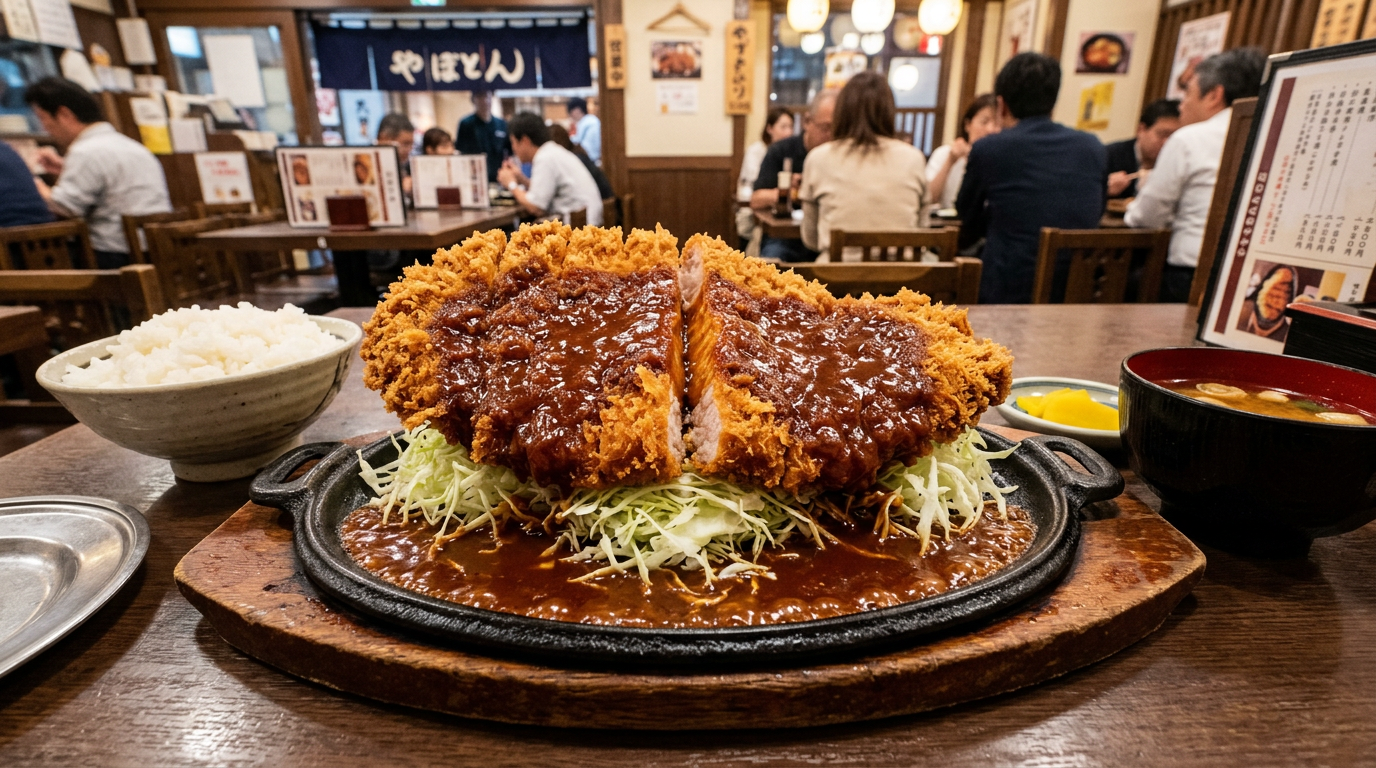
2. Miso Katsu (味噌カツ) — Tonkatsu with Hatcho Miso Sauce
Another mysterious dark sauce? That’s miso — Japan’s ultimate fermented weapon. Crispy fried pork smothered in sweet and savory miso sauce. One bite with white rice and you’ll understand why Nagoya is obsessed.
What it is: A crispy deep-fried pork cutlet drowned in a thick, sweet-savory sauce made from hatcho miso – a dark red soybean paste aged for over 2 years (two summers and two winters). This isn’t your regular tonkatsu with light brown sauce. The miso transforms it into something entirely different.
Where to eat: Yabaton (矢場とん) Yabacho Honten
Nagoya’s most famous miso katsu chain. You’ll spot the pig mascot everywhere.
- Must-try: Waraji Tonkatsu Set ¥2,000 — a massive cutlet shaped like a traditional straw sandal, with miso soup, rice, and cabbage
- Price: ¥1,300-2,000 per person
- Hours: 11:00-21:00 (L.O. 20:30). No regular holidays.
- Getting there: Meijo Line, Yabacho Station, Exit 4 → 5 min walk
- Official: https://www.yabaton.com/
- Reservation: Not accepted
- Local tip: Also has a branch in ESCA underground at Nagoya Station. English menu available. You can choose sweet or spicy miso sauce.
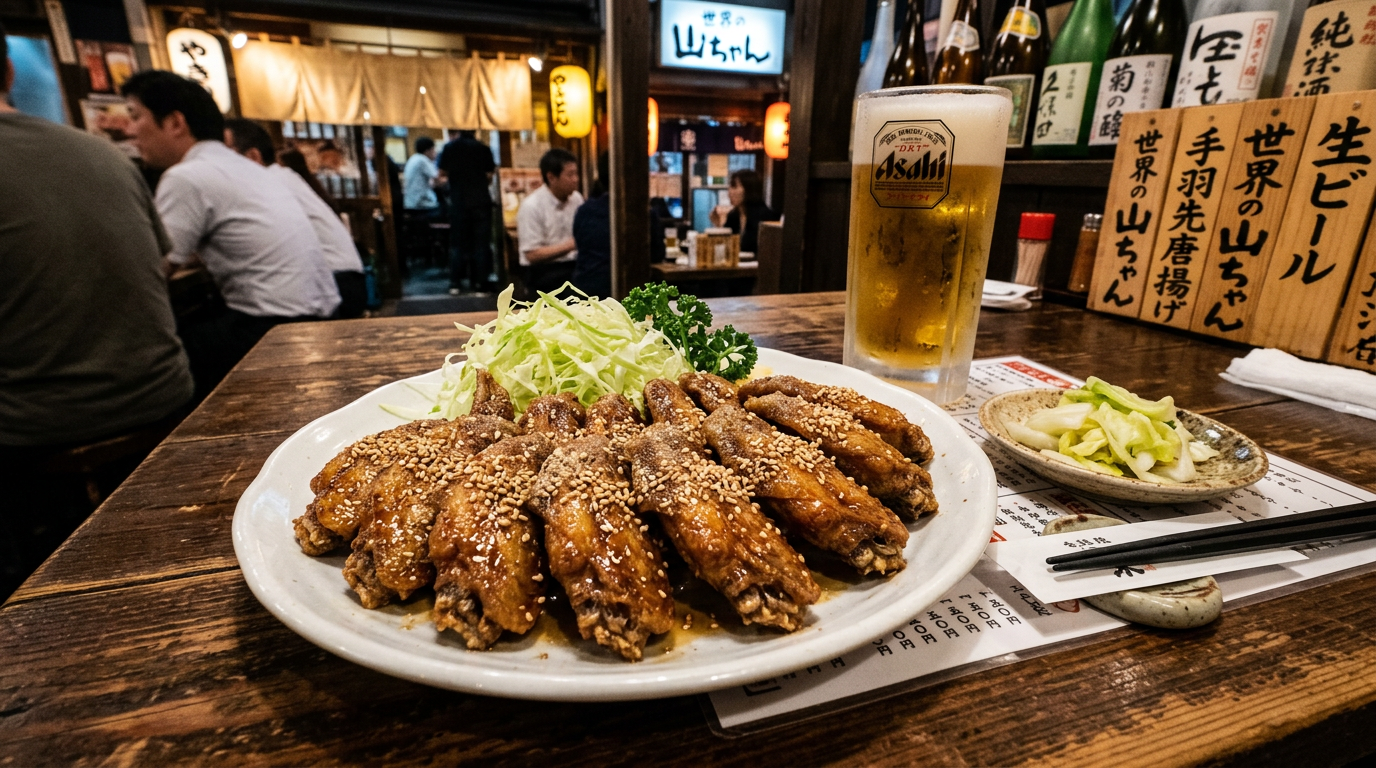
3. Tebasaki (手羽先) — Spicy Deep-Fried Chicken Wings
Pepper punch hits first — then salt and chicken umami explode together. Same salt-and-pepper chicken you know, but a totally different dimension. So addictive that locals crush 30 to 40 pieces in one sitting. No joke.
What it is: Double-fried chicken wings coated in a savory-sweet or spicy glaze. Tebasaki is Nagoya’s ultimate beer snack, and two rival chains have been battling for decades over who invented it.
The originator: Furaibo (風来坊) Sakae — est. 1963
- Must-try: Tebasaki Karaage, 5 pieces ¥693 — sweet soy glaze + white sesame
- Price: ¥2,000-3,000 per person (with drinks)
- Hours: Mon-Thu 17:00-23:00 (L.O. 22:30), Fri-Sat 17:00-24:00 (L.O. 23:30). Closed Sundays.
- Getting there: Higashiyama Line, Sakae Station → 5 min walk
- Official: https://www.furaibo.com/
The rival: Sekai no Yamachan (世界の山ちゃん) Honten
- Must-try: Maboroshi no Tebasaki, 5 pieces ¥660 — peppery-spicy style
- Price: ¥2,000-3,000 per person (with drinks)
- Hours: Mon-Fri 16:00-23:15, Sat 15:00-24:15, Sun/Holidays 15:00-23:15. No regular holidays.
- Getting there: Higashiyama Line, Sakae Station, Exit 12 → 5 min walk
- Official: https://www.yamachan.co.jp/
- Local tip: Try both and pick your side. Furaibo is sweet-sesame, Yamachan is peppery-spicy. Locals are fiercely loyal to one or the other.
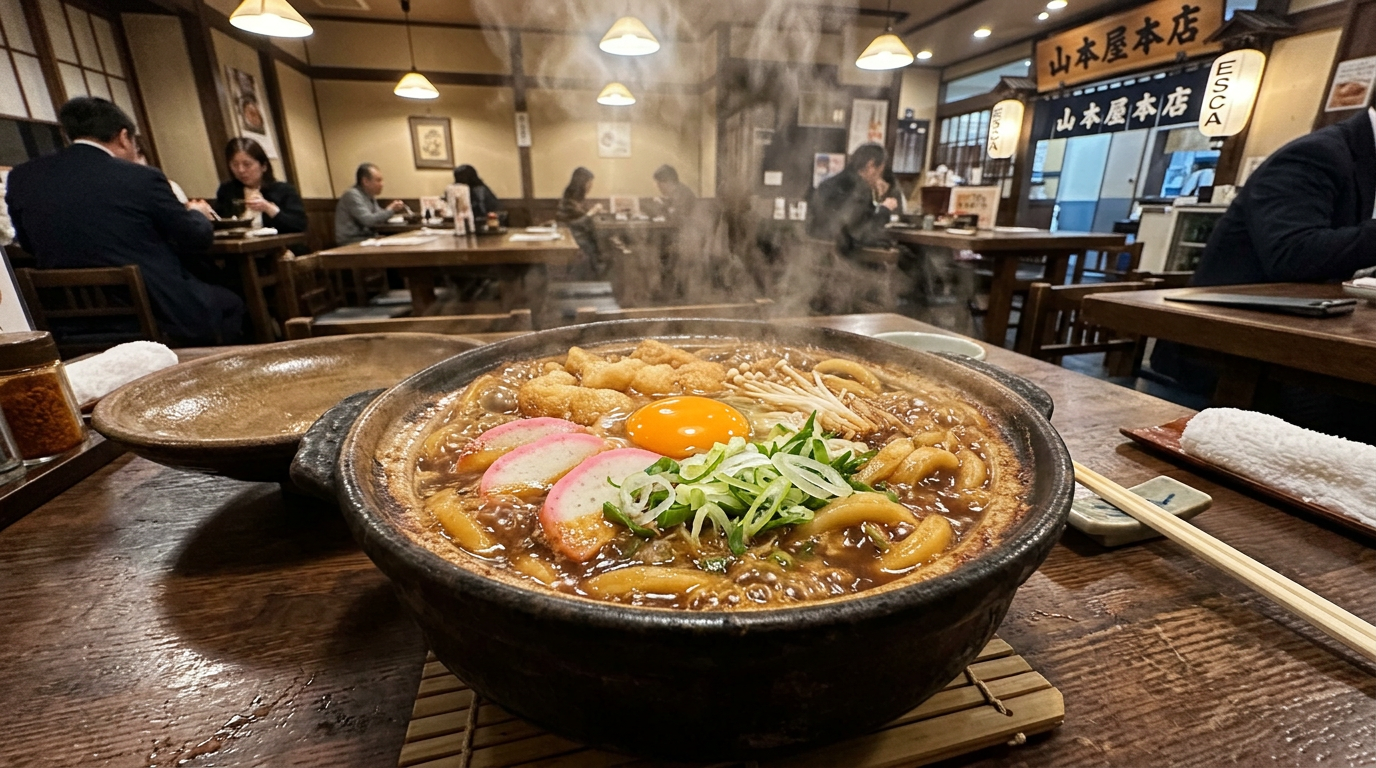
4. Miso Nikomi Udon (味噌煮込みうどん) — Miso-Stewed Udon in a Clay Pot
Even Japanese people outside Nagoya say “Is this udon?! Way too hard!” — and that’s exactly the point. It arrives bubbling and boiling in a clay pot. Burns guaranteed. But piping hot is the only way to eat it.
What it is: Firm, chewy udon noodles simmered in a rich hatcho miso broth, served bubbling in a clay pot. The noodles are intentionally harder than regular udon – this isn’t undercooked, it’s by design.
Where to eat: Yamamotoya Honten ESCA (山本屋本店)
- Must-try: Miso Nikomi Udon from ¥1,353
- Price: ¥1,353-2,500 per person
- Hours: 10:00-22:00 (L.O. 21:15). No regular holidays.
- Getting there: JR Nagoya Station, Taiko-dori Exit → ESCA underground mall (directly connected)
- Official: https://www.yamamotoyahonten.co.jp/
- Reservation: Not accepted
- Local tip: The lid has no hole – it’s designed to be used as your serving plate. Crack a raw egg into the pot and let it cook to soft-set in the residual heat. That’s how locals do it.
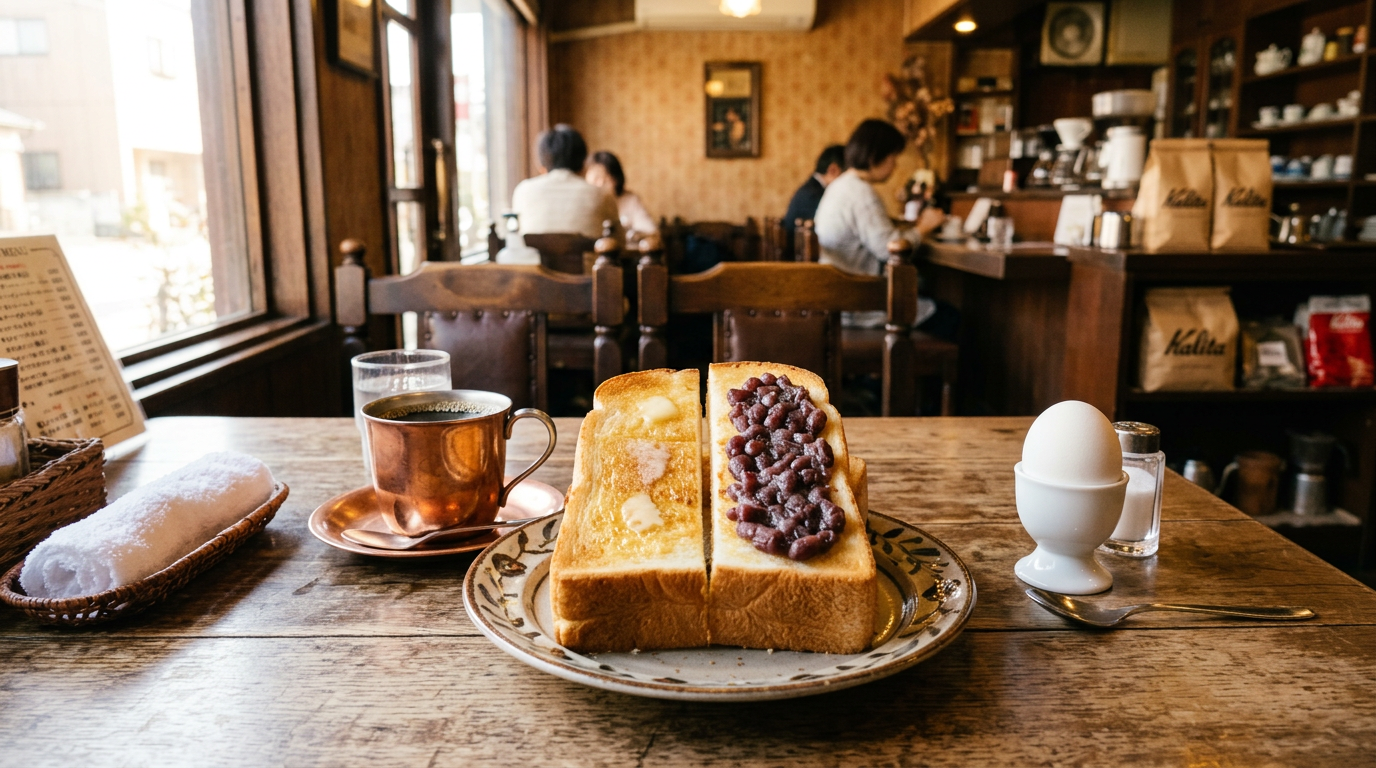
5. Ogura Toast (小倉トースト) — Nagoya’s Morning Culture Icon
Another dark food? Not miso this time — sweet red bean paste. Pile it on buttered crispy toast and let salty butter meet sweet bean in your mouth. Absolute bliss. And here’s the kicker: you can get it for free.
What it is: Thick-sliced milk bread, toasted golden, spread with butter and ogura-an – a sweet red bean paste studded with whole azuki beans. But ogura toast is just the gateway to something bigger: Nagoya’s legendary morning culture.
The deal: Order any drink at a Nagoya kissaten (traditional coffee shop) before 11 AM, and you get a free breakfast – toast, boiled egg, and sometimes salad. You pay only for the drink. This isn’t a tourist gimmick. Locals do this every single day.
Where to eat: Komeda Coffee ESCA (コメダ珈琲店)
The Nagoya-born chain that made morning culture famous across Japan.
- Must-try: Morning Set — FREE with any drink order (choose from boiled egg, egg paste, or ogura-an)
- Price: ~¥550 (drink only – breakfast is free)
- Hours: 7:00-22:00 (morning service 7:00-11:00)
- Getting there: JR Nagoya Station, Taiko-dori Exit → ESCA underground, 1-2 min walk
- Official: https://www.komeda.co.jp/
- Local tip: Specifically request “ogura-an” as your topping – the other two free options are boiled egg and handmade egg paste.
For the real deal: Coffee House KAKO (かこ 花車本店)
A tiny 18-seat kissaten roasting its own beans since 1972. Tabelog Top 100 Kissaten.
- Must-try: Chantilly Rouge Special — butter toast + house-made anko + whipped cream + daily jam. Drink + ¥350 (~¥900 total)
- Hours: 7:00-17:00. Open daily (closed Jan 1 only).
- Getting there: Sakura-dori Line, Kokusai Center Station, Exit 3 → 3 min walk
- Official: No website (Tabelog)
- Payment: Cash only
- Local tip: Arrive at 7:00 AM opening or after 10:00 AM. The 8:30-9:30 window has serious lines.
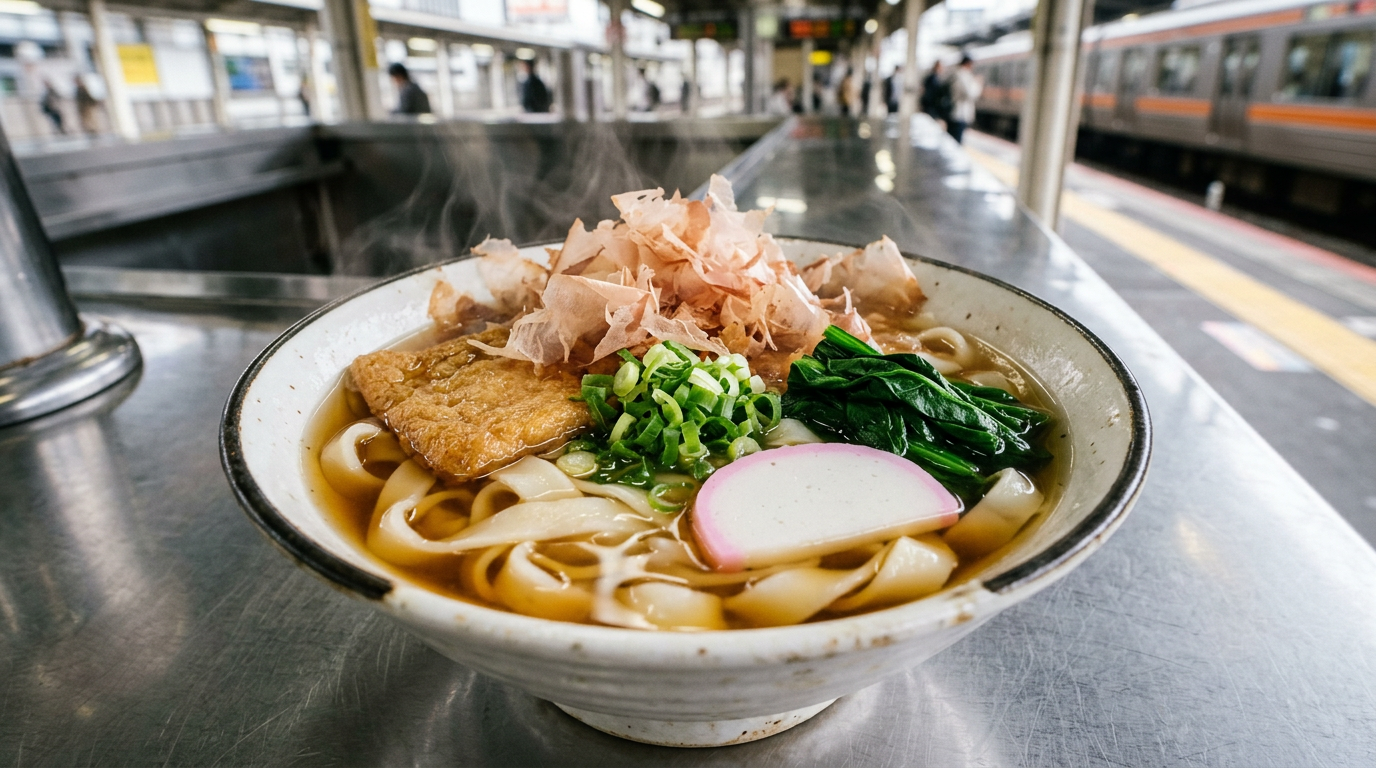
6. Kishimen (きしめん) — Nagoya’s Flat Udon Noodles
Train leaves in 5 minutes? Buy a ticket, order, served in 60 seconds, slurp it down, jump on the train. This happens daily here. The flat shape was invented to cook even one second faster. Want to experience the Japanese salaryman life? This is it.
What it is: Wide, flat wheat noodles (about 7-8mm wide, 1mm thick) in a tamari soy sauce and bonito broth, topped with spinach, fish cake, fried tofu, and a pile of bonito flakes. The flat shape gives kishimen a silky, slippery texture that’s completely different from regular udon.
Fun fact: Around 2013, kishimen was called an “endangered species” of Nagoya food. A local revival movement – the Kishikoro Stamp Rally – brought it back from the brink. Today it’s thriving again.
Where to eat: Sumiyoshi (住よし) — JR Nagoya Station Platforms
Standing noodle shops directly on the train platforms. A Nagoya institution since 1961.
- Must-try: One-Coin Kishimen ¥500 (shrimp tempura + fried tofu + bonito + green onion)
- Price: ¥430-580 per person
- Hours: Conventional platforms 7:00-20:30 / Shinkansen platforms 6:00-21:40
- Getting there: Inside JR Nagoya Station, on the train platforms (need a platform ticket ¥150 if not boarding a train)
- Official: https://jt-s.net/
- Payment: Cash or IC cards only (no credit cards)
- Local tip: Go to the conventional line platforms (especially 3-4) where they fry the tempura to order. Shinkansen platforms sometimes use pre-fried tempura. Allow 5-7 minutes total.
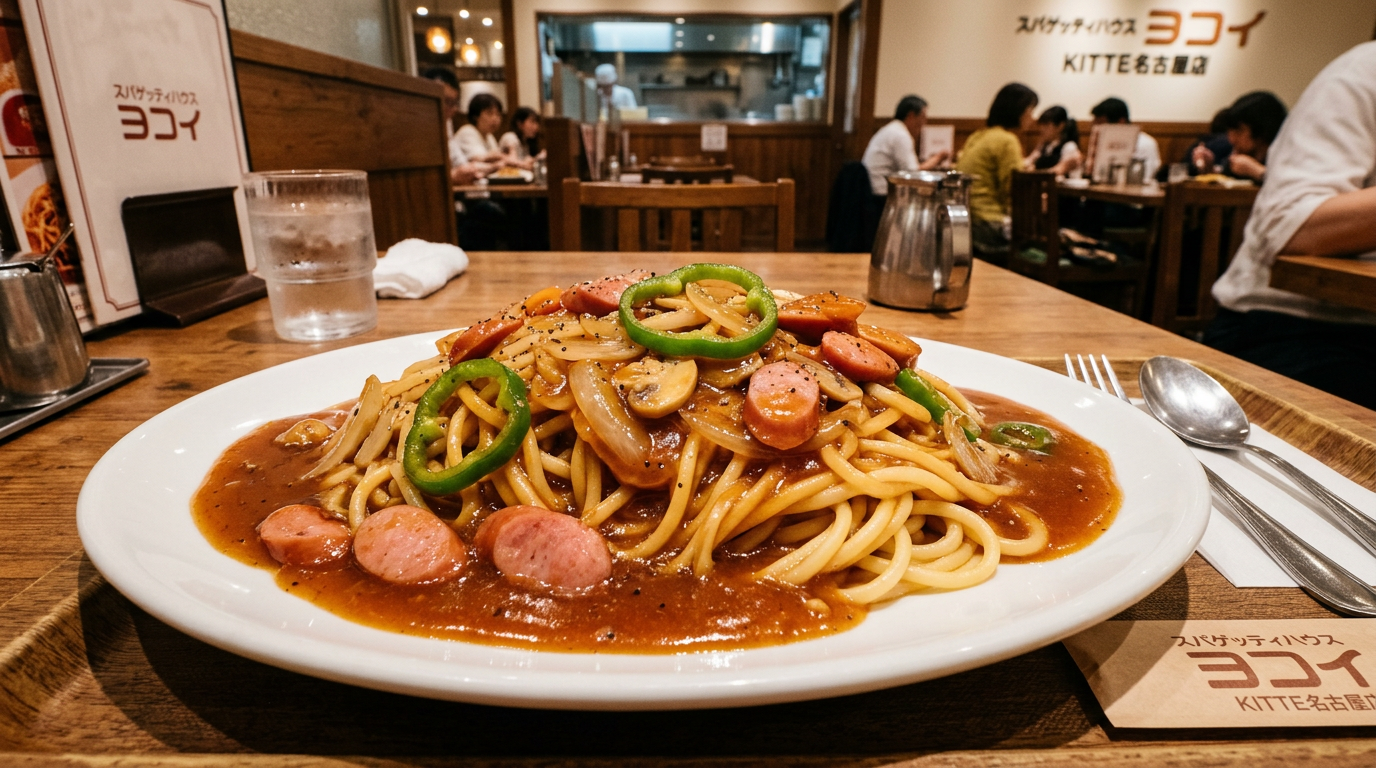
7. Ankake Spaghetti (あんかけスパゲッティ) — Nagoya’s Unique Pasta
Even Japanese people get tricked: “This isn’t spaghetti! It’s udon!” You can’t understand it until you try it. But once you do — no escape. The thick noodles trap the rich sauce, and the more you chew, the deeper the flavor gets.
What it is: Thick spaghetti noodles (2.2mm) coated in a peppery, slightly spicy tomato-based sauce with a thick, almost gravy-like consistency. Toppings are named after countries: “Milanese” (meat), “Country” (vegetables), or the ultimate combo “Mirakan” (both).
This is arguably Nagoya’s most distinctive creation – and you genuinely cannot find it outside the city.
Where to eat: Yokoi KITTE Nagoya (ヨコイ)
The originator of ankake spaghetti.
- Must-try: Mirakan ¥1,250 (the full meat + vegetable combo)
- Price: ¥850-1,550 per person
- Hours: 11:00-22:00 (L.O. 21:00)
- Getting there: JR Nagoya Station, Sakura-dori Exit → KITTE Nagoya B1F (directly connected)
- Official: https://www.yokoi-anspa.jp/
- Local tip: Even “regular” size is 1.5x a normal pasta serving. Order small if you’re not starving. The sauce has a kick of black pepper – that’s intentional.
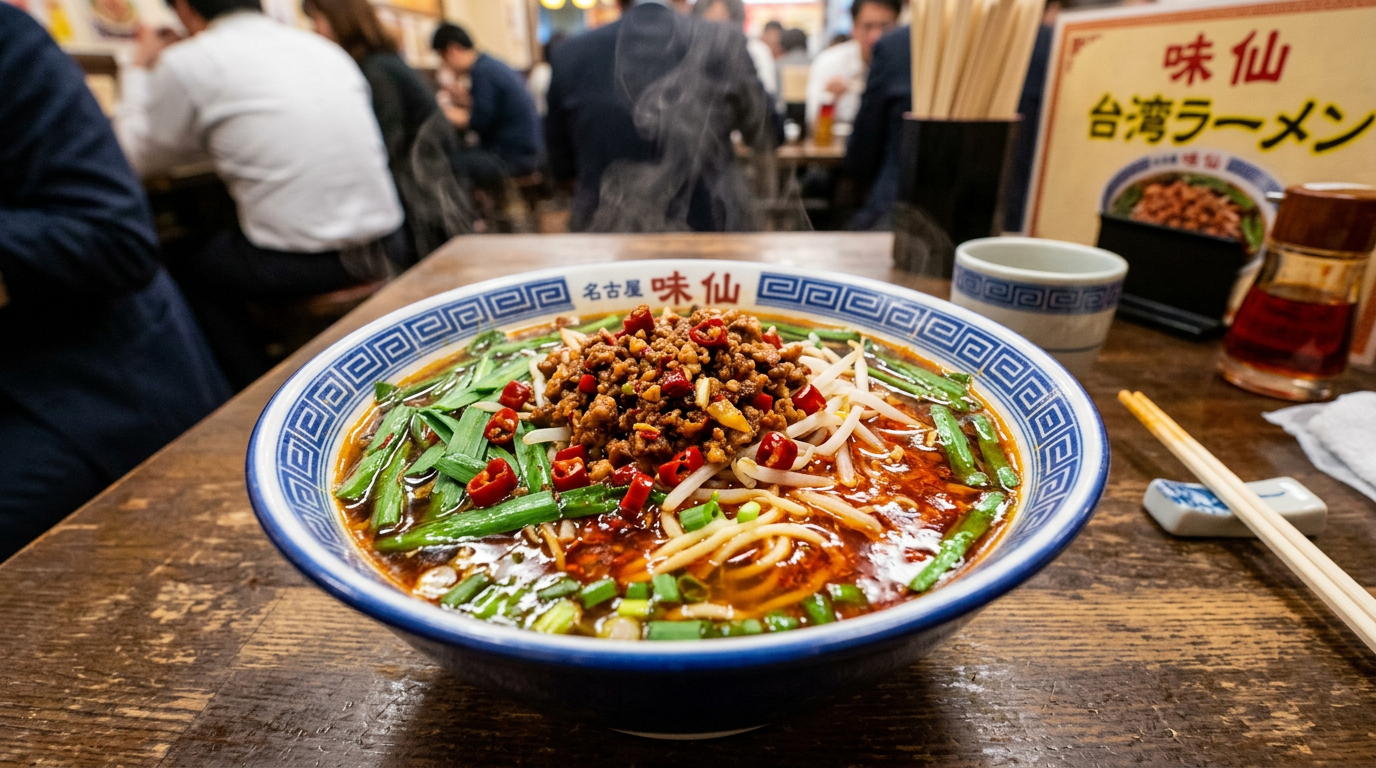
8. Taiwan Ramen (台湾ラーメン) — The Spicy Ramen That Doesn’t Exist in Taiwan
Clear broth? Don’t be fooled — insane heat is hiding inside. Locals sweat through every desperate bite. Meat, chili, chives — your hands won’t stop. “Can I even finish this?!” …and then the bowl’s already empty.
What it is: Ground pork stir-fried with chili peppers and garlic (“Taiwan minchi”), piled on top of thin noodles in a chicken-stock soy sauce broth, with bean sprouts, garlic chives, and green onion. It’s genuinely spicy – significantly hotter than typical Japanese ramen.
The irony: Taiwan Ramen was invented in Nagoya around 1970 by Guo Mingyu, a Taiwanese-born chef. He was inspired by a mild Taiwanese noodle dish but cranked up the heat dramatically. It was originally just a staff meal, but customers noticed it and demanded to order it too. In Taiwan, this dish is ironically called “Nagoya Ramen.”
Spice levels (named after coffee strength):
- American = Mild (best for first-timers)
- Taiwan = Standard (already quite spicy)
- Italian = Hot (double the chili)
Where to eat: Misen JR Nagoya Station (味仙)
The restaurant that invented Taiwan Ramen.
- Must-try: Taiwan Ramen ~¥850
- Price: ~¥850-1,500 per person
- Hours: 11:00-22:30 (L.O. 22:00). No regular holidays.
- Getting there: JR Nagoya Station, Taiko-dori South Exit → 2 min walk (inside station)
- Official: https://www.misen.ne.jp/
- Reservation: Not needed (high turnover)
- Local tip: Order “American” for your first time – it’s still flavorful and spicy by Western standards, but manageable. English and Chinese menus available.
Budget Guide — How Much Does Nagoya Food Cost?
| Budget Level | Cost Per Meal | What You Get |
|---|---|---|
| 💰 Budget | ¥430-1,000 (~$3-7) | Kishimen at Sumiyoshi (¥430-580), Komeda morning (just |
| 💰💰 Mid-range | ¥1,000-2,500 (~$7-17) | Miso Katsu at Yabaton (¥1,300-2,000), Ankake Spaghetti (¥850-1,550), Miso Nikomi Udon (¥1,353-2,123), Tebasaki + beer (¥2,000-3,000) |
| 💰💰💰 Splurge | ¥3,350-5,000+ (~$22-33+) | Hitsumabushi at Maruya (from ¥3,350) or Atsuta Horaiken (¥4,950) |
Daily food budget estimate: Budget ¥2,500-3,000 / Mid-range ¥4,000-6,000 / Splurge ¥8,000-12,000
A full day of eating in Nagoya generally costs less than equivalent meals in Tokyo.
Restaurant Quick Reference
| # | Name | Area | Cuisine | Budget/person | Must-Try |
|---|---|---|---|---|---|
| 1 | Atsuta Horaiken Honten | Atsuta | Hitsumabushi | ¥4,950 | Hitsumabushi |
| 2 | Maruya Honten JR Station | Nagoya Stn | Hitsumabushi | ¥3,350-4,550 | Mini Hitsumabushi |
| 3 | Yabaton Yabacho | Yabacho | Miso Katsu | ¥1,300-2,000 | Waraji Tonkatsu Set |
| 4 | Furaibo Sakae | Sakae | Tebasaki | ¥2,000-3,000 | Tebasaki Karaage |
| 5 | Sekai no Yamachan | Sakae | Tebasaki | ¥2,000-3,000 | Maboroshi Tebasaki |
| 6 | Yamamotoya Honten ESCA | Nagoya Stn | Miso Nikomi | ¥1,353-2,500 | Miso Nikomi Udon |
| 7 | Komeda Coffee ESCA | Nagoya Stn | Morning/Toast | ~¥550 | Morning Ogura |
| 8 | KAKO Hanaguruma | Kokusai Center | Morning/Toast | ~¥550-1,000 | Chantilly Rouge |
| 9 | Sumiyoshi | Nagoya Stn (platforms) | Kishimen | ¥430-580 | One-Coin Kishimen |
| 10 | Yokoi KITTE | Nagoya Stn | Ankake Spaghetti | ¥850-1,550 | Mirakan |
| 11 | Misen JR Station | Nagoya Stn | Taiwan Ramen | ~¥850 | Taiwan Ramen (American) |
Insider Tips from a Nagoya Resident
ESCA underground is your one-stop Nagoya food hall: Connected directly to Nagoya Station’s Shinkansen exit, ESCA has miso nikomi udon (Yamamotoya Honten), miso katsu (Yabaton), and Komeda Coffee all in one place. Add Sumiyoshi’s kishimen on the JR platforms, and you can cover most of Nagoya meshi without leaving the station area.
Abuse the morning culture: A ~¥550 coffee gets you free toast and egg at any kissaten before 11 AM. That’s a ~$4 breakfast. In Tokyo, the same meal would cost ¥1,000-1,500. Do this every morning you’re in Nagoya.
Master the tebasaki technique: Hold both ends of the wing and twist in opposite directions. The bones slide right out. Locals do this in under a second. You’ll feel clumsy the first few times – that’s normal.
The miso nikomi lid trick: The clay pot lid has no hole on purpose. Flip it over and use it as your serving plate. Crack a raw egg into the pot while it’s still bubbling, and let it soft-set. That’s the local way.
Order “American” at Misen: Even if you love spicy food, start with “American” level Taiwan Ramen on your first visit. It’s still properly flavorful and spicy by Western standards. You can always upgrade to “Taiwan” level next time.
Sumiyoshi: go to the conventional platforms: The kishimen shops on the Shinkansen platforms sometimes use pre-fried tempura. The conventional line platforms (especially 3-4) fry it fresh when you order. Buy a platform ticket (¥150) if you’re not boarding a train.
Nagoya is more affordable than Tokyo: Same quality, noticeably lower prices. Plus shorter lines at famous restaurants because fewer tourists know about Nagoya. That’s the real insider advantage.
FAQ
Q: How many days do I need to try all Nagoya food? A: 2 days is ideal. Day 1: Komeda morning → hitsumabushi lunch → tebasaki dinner. Day 2: Kishimen at the station → miso katsu lunch → Taiwan Ramen dinner. Swap in ankake spaghetti or miso nikomi udon as you prefer.
Q: Is Nagoya food spicy? A: Almost none of it is. Taiwan Ramen is the only genuinely spicy dish, and even that has a mild “American” option. Miso-based dishes (miso katsu, miso nikomi) are savory-sweet, not spicy at all.
Q: Are there vegetarian options? A: Limited, honestly. The anko in ogura toast is plant-based, but the toast itself typically contains butter. Kishimen broth uses bonito (fish), so it’s not strictly vegetarian either. Most Nagoya meshi is meat or fish-based. Your best bet is independent vegetarian restaurants.
Q: Is Nagoya food cheaper than Tokyo? A: Yes, noticeably. Expect lower prices for the same quality. Plus the morning culture means your breakfast costs just a coffee (~¥550). A full day of eating costs ¥2,500-3,000 on a budget – that’s hard to beat anywhere in Japan.
Plan Your Trip
Nagoya sits right between Tokyo (about 1 hr 40 min by Shinkansen) and Kyoto (about 35 min). Most travelers skip it entirely – and they’re missing Japan’s most underrated food city. With shorter lines, more affordable prices, and a food culture you literally can’t find anywhere else, Nagoya deserves at least 1-2 days on your itinerary. Be the traveler who goes beyond the guidebooks – the food alone makes it worth the stop.
Related guides: